
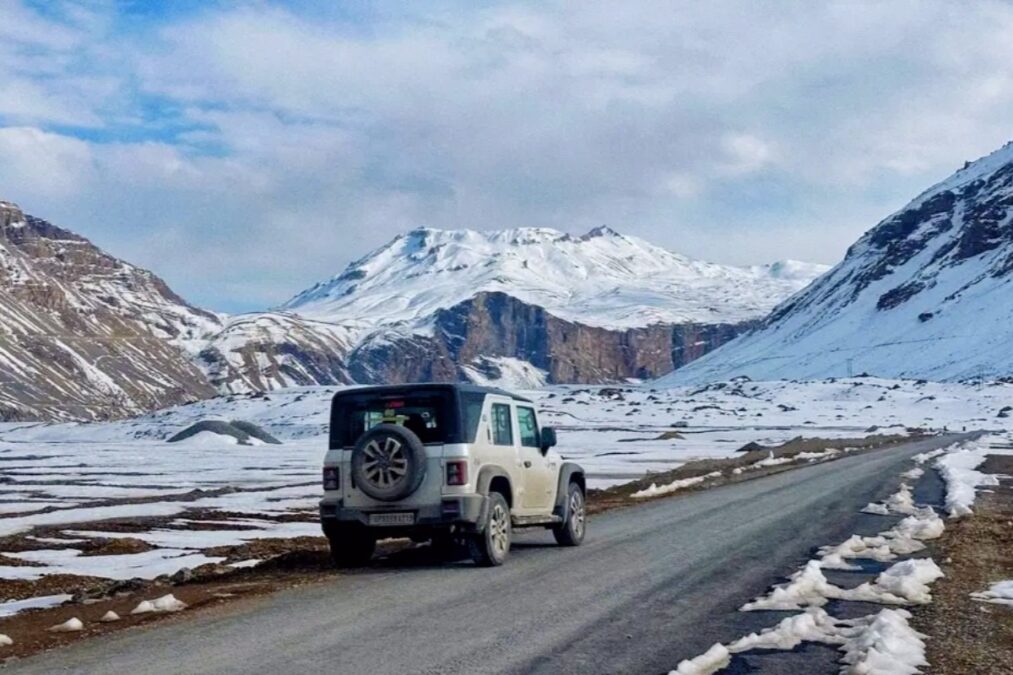
Ladakh Snow Leopard Safari 2026 is set to become one of India’s most distinctive wildlife tourism experiences, with the Union Territory preparing to introduce a new high-altitude wildlife safari focused on snow leopards, birds and the unique flora and fauna of the Trans-Himalayan region.
The Ladakh administration has approved guided wildlife safaris on popular snow-leopard and bird-watching trails, with specially designed open-back vehicles, trained local drivers and guides.
The initiative is being developed as more than a conventional Jeep safari. Its central objective is to combine wildlife conservation, responsible tourism, community participation and sustainable livelihoods.
The administration has also directed the Forest Department to explore safari routes across Hemis National Park, Changthang Wildlife Sanctuary and Karakoram Wildlife Sanctuary, along with wildlife-rich areas such as Nubra, Zanskar, Sham, Kargil and Drass.
Preparations are being targeted for completion before the winter 2026 snow-leopard sighting season.
Ladakh’s official conservation material records approximately 477 snow leopards in the Union Territory out of an estimated 718 in India, making Ladakh the country’s most important snow-leopard landscape.
What Is the Ladakh Snow Leopard Safari 2026?
The Ladakh Snow Leopard Safari is a new guided high-altitude wildlife tourism programme designed around the region’s snow-leopard and bird-watching landscapes.
The administration plans to introduce guided Jeep Safaris using specially designed open-back vehicles operated by trained local drivers and guides.
The purpose is not simply to take tourists into the mountains looking for animals.
The programme is intended to:
- Regulate vehicle movement in wildlife habitats
- Reduce illegal off-roading
- Minimise disturbance to animals
- Improve the quality of wildlife interpretation
- Provide trained local employment
- Promote responsible and sustainable tourism
- Encourage birdwatching and nature tourism
- Generate economic benefits for local communities
- Strengthen conservation awareness
This approach is particularly important in Ladakh because the region’s high-altitude ecosystems are extremely fragile.
India’s First High-Altitude Wildlife Safari
Ladakh is describing the initiative as India’s first-ever “high-altitude wildlife safari”.
The concept differs significantly from the established jeep safari systems of India’s tiger and rhino reserves.
A safari in Ladakh takes place in a landscape of:
- Rocky mountains
- High-altitude valleys
- Cold deserts
- Alpine meadows
- Mountain passes
- High-altitude wetlands
- Remote villages
- Vast open landscapes
The animals are also distributed differently.
A snow leopard can occupy an enormous mountain territory and may remain invisible even when experienced trackers are searching the surrounding slopes.
Consequently, the Ladakh safari experience will be based as much on tracking, interpretation and understanding the landscape as on simply driving from one wildlife-viewing point to another.
Why Ladakh Is So Important for Snow Leopards
Ladakh is one of the most important snow-leopard landscapes in the world.
The Snow Leopard Population Assessment in India (SPAI) estimated India’s snow-leopard population at 718, with approximately 477 in Ladakh. The Ladakh administration identifies the Union Territory as having India’s largest snow-leopard population.
This makes Ladakh an exceptional destination for travellers interested in:
- Snow leopard photography
- Wildlife tracking
- Himalayan wildlife
- Birdwatching
- Nature photography
- Conservation tourism
- High-altitude ecosystems
The official Ladakh wildlife-tour guidelines also describe the region as an important snow-leopard habitat and list a wide range of other high-altitude mammals and birds found in the Union Territory.
Ladakh’s High-Altitude Wildlife
Snow leopards may be the main attraction, but they are far from the only wildlife species found in Ladakh.
The region supports a remarkable variety of high-altitude mammals, including:
- Snow leopard
- Himalayan brown bear
- Pallas’s cat
- Eurasian lynx
- Tibetan wolf
- Tibetan antelope
- Wild yak
- Tibetan gazelle
- Tibetan argali
- Himalayan ibex
- Blue sheep
- Ladakh urial
- Kiang
- Tibetan red fox
Ladakh is also important for high-altitude and migratory birds.
Species associated with the region include:
- Black-necked crane
- Tibetan snowcock
- Himalayan snowcock
- Tibetan sandgrouse
- Tibetan lark
- Saker falcon
- Upland buzzard
- Ibisbill
- Lammergeier
- Mountain chiffchaff
- Dusky thrush
- Naumann’s thrush
- Great rosefinch
- Pale rosefinch
The official Ladakh wildlife-tour guidelines also identify butterflies as an important component of the region’s biodiversity, with around 115 species recorded.
How Difficult Is It to See a Snow Leopard in Ladakh?
Seeing a snow leopard in the wild is never guaranteed.
Snow leopards are exceptionally well adapted to the rocky landscapes of the Himalayas. Their pale, patterned coats provide remarkable camouflage against cliffs, scree slopes and rocky ridges.
They are also elusive and generally avoid unnecessary human contact.
This means that a visitor can spend several hours scanning a mountain slope without seeing anything.
Then, suddenly, a tiny movement on a distant ridge may reveal the animal.
That is one of the reasons snow-leopard tourism is fundamentally different from conventional wildlife safaris.
A snow leopard safari is not a guaranteed sighting tour.
A responsible operator should never promise that visitors will definitely see a snow leopard.
Instead, the experience should focus on:
tracking + patience + local knowledge + wildlife interpretation + landscape appreciation.
Snow Leopard Safari vs Traditional Jeep Safari
| Feature | Traditional Wildlife Safari | Ladakh Snow Leopard Safari |
|---|---|---|
| Main landscape | Forests, grasslands or wetlands | High-altitude mountains and cold deserts |
| Main wildlife | Tigers, rhinos, leopards and other species | Snow leopard and Himalayan wildlife |
| Wildlife distribution | Often concentrated in selected habitats | Widely dispersed across mountain terrain |
| Visibility | Sometimes comparatively predictable | Highly unpredictable |
| Terrain | Forest tracks and established safari roads | Rocky valleys, slopes and mountain tracks |
| Wildlife tracking | Vehicle-based observation | Scanning, tracking and local ecological knowledge |
| Main experience | Wildlife viewing | Wildlife tracking and high-altitude nature |
| Sighting guarantee | Never guaranteed | Particularly difficult |
| Conservation focus | Protected-area management | Conservation + community participation + responsible tourism |
Proposed and Potential Safari Areas in Ladakh
The Forest Department has been directed to explore potential safari routes across several important wildlife landscapes.
The final routes and operating rules may differ by location.
1. Hemis National Park
Hemis National Park is one of Ladakh’s most important snow-leopard landscapes.
Its rugged mountains, deep valleys and high-altitude habitats provide an ideal setting for specialised wildlife tourism.
Hemis is already associated with snow-leopard tracking and wildlife expeditions.
The new guided safari system could introduce a more structured approach to vehicle-based wildlife tourism while maintaining conservation safeguards.
2. Changthang Wildlife Sanctuary
The enormous Changthang landscape is another major wildlife destination.
Its high-altitude plains, wetlands and mountains support species adapted to some of the most extreme environmental conditions in India.
Changthang is particularly attractive for:
- Snow leopard tracking
- Black-necked crane watching
- Kiang sightings
- Birdwatching
- Nature photography
- High-altitude landscape photography
Ladakh has also been strengthening bird and wetland monitoring in Changthang. The 2026 Asian Waterbird Census included survey work in Changthang and Nubra, highlighting the importance of these landscapes for waterbirds and wetland biodiversity.
3. Karakoram Wildlife Sanctuary
The Karakoram Wildlife Sanctuary encompasses a vast and remote high-altitude landscape.
Its rugged terrain and ecological sensitivity make it particularly important to ensure that tourism remains carefully regulated.
The wider conservation planning for Ladakh has emphasised the need to balance wildlife protection with the needs of communities living within and around protected landscapes.
4. Nubra Valley
Nubra is already one of Ladakh’s most popular tourist destinations.
Travellers visit for its:
- Mountain scenery
- Villages
- Monasteries
- Sand dunes
- Double-humped Bactrian camels
- High-altitude landscapes
But Nubra also has wildlife importance.
The local Forest Department has conducted snow-leopard awareness and conservation activities in the region, emphasising the role of local communities and young people in protecting wildlife.
The proposed wildlife safari framework could potentially introduce more structured nature and wildlife experiences in suitable parts of the region.
5. Zanskar
Zanskar is one of Ladakh’s most remote and dramatic regions.
Its deep valleys, rugged mountains and relatively low-density tourism make it attractive for adventure travellers and nature enthusiasts.
Zanskar has also been the focus of environmental education and biodiversity-conservation initiatives involving local institutions and conservation organisations.
6. Sham, Kargil and Drass
The administration has also identified Sham, Kargil and Drass among areas where potential wildlife safari routes may be explored.
These regions combine dramatic mountain landscapes with high-altitude habitats and can add geographical diversity to Ladakh’s emerging wildlife tourism network.
Is the Ladakh Snow Leopard Safari Available Now?
The answer requires some clarification.
Snow-leopard wildlife tours in Ladakh are not entirely new.
Ladakh’s official wildlife-tour guidelines state that snow-leopard sightings and wildlife tours have been operating in the region for more than three decades. The new development is the administration’s decision to introduce a more structured guided high-altitude safari model using specially designed vehicles and trained local personnel.
Therefore, travellers should distinguish between:
Existing snow-leopard tracking tours
and
the new government-backed high-altitude wildlife safari programme.
The new programme is being prepared for implementation, with preparations directed to be completed before the winter 2026 snow-leopard season.
Travellers should confirm the latest official information regarding:
- Safari routes
- Vehicle operations
- Entry requirements
- Permits
- Fees
- Timings
- Group sizes
- Wildlife-viewing rules
- Booking arrangements
before making a wildlife-specific booking.
When Is the Best Time for a Snow Leopard Safari in Ladakh?
According to Ladakh’s official wildlife-tour guidelines, snow-leopard tours are mainly operated during the winter months from November to April.
Winter is particularly significant because snow conditions can influence wildlife movement and may make certain animals easier for experienced trackers to locate.
However, winter in Ladakh is challenging.
Travellers should be prepared for:
- Very low temperatures
- Snow and ice
- Difficult road conditions
- High-altitude exposure
- Weather-related delays
- Limited services in remote areas
- Shorter daylight hours
Snow Leopard Season
November to April
This is the principal period traditionally associated with snow-leopard wildlife tours in Ladakh.
Birdwatching Season
Birdwatching is possible throughout the year, although the species and conditions vary seasonally. Ladakh’s official guidelines identify bird sighting as a year-round wildlife activity.
Butterfly Season
The warmer months, particularly June to September, are more suitable for butterfly observation.
This means Ladakh can offer wildlife experiences well beyond the winter snow-leopard season.
Can You See a Snow Leopard From a Safari Jeep?
Yes, it is possible.
But there is an important difference between possible and guaranteed.
A safari vehicle can take visitors to suitable viewing areas, but the animal determines whether it will appear.
Experienced guides and trackers may look for:
- Movement on rocky slopes
- Paw prints
- Scrape marks
- Wildlife prey activity
- Suitable resting areas
- Mountain ridgelines
- Signs of recent animal movement
Binoculars and spotting scopes can be particularly important.
A distant snow leopard may appear as nothing more than a small grey shape against a mountain wall.
Why Local Guides Are So Important
The success of a high-altitude wildlife safari depends heavily on local knowledge.
Local drivers and guides can understand:
- Mountain terrain
- Weather patterns
- Access routes
- Wildlife habitats
- Local communities
- Seasonal conditions
- Appropriate vehicle movement
The new Ladakh model specifically emphasises trained local drivers and guides.
This is important not only for tourism but also for creating direct economic opportunities for people living in wildlife-rich areas.
Community-Led Conservation: The SHAN Model
One of the most important aspects of Ladakh’s new wildlife tourism strategy is the Snow Leopard and High-Altitude Nature (SHAN) Conservation Society.
The objective is to create a conservation model in which the government is not the only stakeholder responsible for protecting nature.
Local communities are intended to become active partners.
The broader SHAN approach includes:
- Wildlife conservation
- Community participation
- Sustainable livelihoods
- Responsible tourism
- Waste management
- Plastic-free tourism
- Environmental education
- Wildlife awareness
This is particularly relevant in Ladakh because many wildlife landscapes overlap with areas used by local communities.
Conservation cannot succeed if local residents are excluded from decision-making or receive no economic benefit from protecting wildlife.
How Local Communities Can Benefit
The new wildlife tourism model has the potential to create opportunities for:
- Local safari drivers
- Wildlife guides
- Birdwatching guides
- Trackers
- Homestay owners
- Local transport providers
- Photographers
- Artisans
- Souvenir producers
- Community tourism organisations
This could help create a conservation-linked local economy.
The philosophy is straightforward:
Protecting wildlife should also create sustainable livelihoods for communities living alongside it.
20 Local Youth to Be Trained in Birdwatching
The programme includes a specific youth-development component.
Twenty local young people will be selected and trained in birdwatching, bird identification and bird-spotting techniques.
They will also receive equipment such as binoculars.
This could create a new generation of local nature interpreters who can guide visitors through Ladakh’s diverse bird habitats.
10 Bird-Watching Hides
The administration has also planned 10 bird-watching hides at major hotspots.
These structures can allow visitors and photographers to observe birds from designated locations while reducing unnecessary movement through sensitive habitats.
For birdwatchers, this could become one of the most interesting additions to Ladakh’s tourism infrastructure.
Black-Necked Crane and Ladakh’s Bird Tourism
The black-necked crane is particularly important to Ladakh’s wildlife identity.
The species is associated with the high-altitude wetlands of Changthang.
Ladakh has been strengthening community-based wetland monitoring and bird conservation, and the administration has also promoted a Black-necked Crane Festival concept focused on conservation, sustainable tourism and nature-based livelihoods.
This creates an opportunity for Ladakh to develop a wildlife tourism product that extends beyond snow leopards.
Wildlife Photography Opportunities
Ladakh’s landscapes are naturally suited to wildlife photography.
Potential subjects include:
- Snow leopard
- Black-necked crane
- Himalayan ibex
- Blue sheep
- Kiang
- Pallas’s cat
- Tibetan fox
- High-altitude raptors
- Migratory birds
- Mountain landscapes
The administration has also announced wildlife photography fellowships for 10 local youths every year, encouraging local participation in wildlife documentation.
Will the New Safari Help Conservation?
It can—but the outcome will depend on implementation.
A properly regulated safari can potentially:
Reduce illegal off-roading
Designated routes can reduce uncontrolled vehicle movement.
Improve wildlife awareness
Guides can explain wildlife behaviour and conservation requirements.
Create local employment
Tourism revenue can support communities living near wildlife habitats.
Encourage responsible tourism
Visitors can learn why they should not chase, bait or disturb animals.
Strengthen conservation funding
A well-managed tourism programme can potentially generate economic value associated with protected landscapes.
But tourism must remain controlled.
If visitor numbers grow rapidly without adequate safeguards, the programme could create additional pressure through:
- More vehicles
- More roads
- More accommodation
- Increased waste
- Greater noise
- Unregulated photography
- Habitat disturbance
The challenge is therefore not simply how to bring more tourists to Ladakh, but how to bring visitors without damaging the ecosystem they came to experience.
Why Conservationists Have Raised Concerns
The introduction of safari tourism in Ladakh has generated an important conservation debate.
Ladakh is not Kaziranga.
It is not Ranthambore.
Its ecological conditions are fundamentally different.
Snow leopards are dispersed across enormous mountain landscapes rather than concentrated in easily accessible safari zones.
There is therefore a risk that commercial demand could eventually encourage pressure for:
- More roads
- More off-road access
- More viewing points
- Restaurants
- Camps
- Hotels
- Larger tourism infrastructure
A successful Ladakh safari model will need to prevent the pursuit of wildlife sightings from becoming more important than wildlife protection.
Responsible Snow Leopard Tourism: What Travellers Should Do
If you join a snow-leopard or high-altitude wildlife expedition, responsible behaviour should be non-negotiable.
Stay on designated routes
Never pressure a driver to leave an authorised route for a closer view.
Never bait wildlife
Wild animals should never be lured using food or livestock.
Never chase animals
A wildlife sighting should not become a vehicle pursuit.
Maintain a safe distance
Follow the guide’s instructions and maintain appropriate viewing distances.
Keep noise low
Loud conversations, music and unnecessary vehicle noise can disturb wildlife.
Use long lenses
Wildlife photography should rely on optical reach rather than physically approaching animals.
Never block wildlife movement
Vehicles should not surround an animal or obstruct its natural path.
Do not litter
Carry waste back and use designated waste-management facilities.
Respect local communities
Many wildlife habitats are also traditional landscapes used by local residents and pastoral communities.
Follow official regulations
Safari routes, permits, access restrictions and wildlife rules may change.
What Makes a Responsible Ladakh Wildlife Tour Different?
A responsible Ladakh wildlife tour should prioritise low-impact wildlife observation over maximum sightings.
A good wildlife programme should ideally involve:
- Trained local guides
- Experienced wildlife trackers
- Designated safari routes
- Small or controlled groups
- Appropriate viewing distances
- Wildlife interpretation
- Local accommodation where practical
- Responsible photography
- No baiting
- No chasing
- No illegal off-roading
- Minimal disturbance
The objective should be to experience the wilderness without turning it into a conventional mass-tourism attraction.
Ladakh Snow Leopard Safari 2026: What Travellers Should Expect
The new safari programme could make Ladakh one of India’s most important destinations for specialist wildlife tourism.
But visitors should have realistic expectations.
A Ladakh snow-leopard expedition can involve long periods of observation.
You might spend hours scanning a mountain slope.
You may see:
- Himalayan ibex
- Blue sheep
- Kiang
- Birds of prey
- Black-necked cranes
- Tibetan foxes
- Other high-altitude species
without seeing a snow leopard.
And that is completely normal.
The snow leopard’s invisibility is part of the experience.
When one finally appears, even at a considerable distance, the encounter can be extraordinary.
Planning a Ladakh Wildlife Holiday
A wildlife-focused Ladakh holiday can be combined with some of the region’s major attractions.
Depending on the season and confirmed safari routes, an itinerary could include:
- Leh
- Hemis
- Thiksey
- Nubra Valley
- Pangong Lake
- Changthang
- Tso Moriri
- Zanskar
- Kargil
- Drass
However, travellers whose primary objective is snow-leopard tracking should avoid packing too many destinations into a short itinerary.
Wildlife travel requires flexibility.
Spending additional days in a wildlife area can provide more opportunities for tracking and reduce the pressure to rush between destinations.
A wildlife holiday should therefore be planned differently from a standard sightseeing tour.
Suggested Ladakh Snow Leopard Safari Itinerary
A specialist itinerary could potentially be structured around:
Day 1: Arrival in Leh and acclimatisation
Day 2: Leh acclimatisation and local exploration
Day 3: Hemis region and wildlife orientation
Day 4: Transfer towards the selected snow-leopard tracking area
Day 5: Full-day wildlife tracking
Day 6: Full-day wildlife tracking and photography
Day 7: Wildlife tracking / birdwatching
Day 8: Return towards Leh
Day 9: Nubra or another destination, depending on season and route
Day 10: Return to Leh
The exact itinerary should be adjusted according to the officially designated safari routes, wildlife conditions, road access and the traveller’s fitness and acclimatisation requirements.
Is Winter Travel to Ladakh Suitable for Everyone?
No.
Winter wildlife tourism can be physically demanding.
Travellers should consider:
- Altitude
- Cold exposure
- Road conditions
- Accommodation availability
- Medical preparedness
- Travel insurance
- Physical fitness
- Weather disruptions
Adequate acclimatisation is particularly important.
Visitors should not attempt strenuous high-altitude activities immediately after arriving in Leh.
Ladakh Snow Leopard Safari FAQ
Is the Ladakh Snow Leopard Safari starting in 2026?
The Ladakh administration has approved the introduction of guided wildlife safaris on snow-leopard and bird-watching trails and has directed preparations to be completed before the winter 2026 snow-leopard season.
Is this the first snow-leopard tour in Ladakh?
No. Snow-leopard wildlife tours have been operating in Ladakh for decades. The new development is the administration’s planned guided high-altitude wildlife safari model using specially designed vehicles and trained local personnel.
What is India’s first high-altitude wildlife safari?
The Ladakh administration describes its new guided wildlife safari initiative as India’s first-ever high-altitude wildlife safari, designed specifically around the region’s high-altitude wildlife and landscapes.
Where will the Ladakh wildlife safari operate?
Potential areas include Hemis National Park, Changthang Wildlife Sanctuary, Karakoram Wildlife Sanctuary, Nubra, Zanskar, Sham, Kargil and Drass. Final operating routes will depend on official planning.
Where is the best place to see snow leopards in Ladakh?
Hemis National Park and other suitable high-altitude wildlife areas are associated with snow-leopard tracking. The best location can vary depending on season, wildlife movement and local tracking conditions.
What is the best month for snow leopard sightings in Ladakh?
Snow-leopard wildlife tours are traditionally concentrated between November and April.
Can I see a snow leopard in summer?
Snow leopards can be present throughout their habitat, but traditional specialised snow-leopard tourism in Ladakh is primarily concentrated during winter.
Can a safari guarantee a snow leopard sighting?
No.
No responsible wildlife operator should guarantee a sighting of a wild snow leopard.
What other wildlife can I see?
Depending on the location and season, visitors may encounter Himalayan ibex, blue sheep, kiang, Tibetan fox, Pallas’s cat, birds of prey, black-necked cranes and other high-altitude species.
Is Ladakh’s safari the same as Ranthambore?
No.
Ranthambore is primarily known for tiger safaris in a very different ecological environment. Ladakh’s wildlife safari is designed for a high-altitude Himalayan landscape where wildlife is more dispersed and sightings are considerably less predictable.
Will safari vehicles be allowed to go off-road?
The purpose of the guided safari initiative includes preventing illegal off-roading and reducing wildlife disturbance. Travellers should remain on officially authorised routes.
Will local people benefit from the safari?
Community participation is a central part of the new conservation model, with opportunities planned around local drivers, guides, birdwatching, wildlife photography, handicrafts and other sustainable livelihood activities.
What birds can I see in Ladakh?
Ladakh supports a wide range of high-altitude birds, including black-necked cranes, Tibetan snowcocks, Himalayan snowcocks, Tibetan sandgrouse, Tibetan larks, Saker falcons and other species.
Is birdwatching possible outside winter?
Yes. Ladakh’s official wildlife-tour guidelines describe birdwatching as a year-round activity, although the species and viewing opportunities vary by season.
The Future of Wildlife Tourism in Ladakh
Ladakh has an opportunity to create a fundamentally different model of wildlife tourism.
Instead of simply replicating the safari systems of India’s tiger and rhino reserves, Ladakh can build a high-altitude, conservation-focused wildlife experience specifically suited to the Trans-Himalayan environment.
The success of the programme will depend on how carefully the authorities manage:
- Visitor numbers
- Vehicle movement
- Safari routes
- Wildlife viewing distances
- Infrastructure
- Waste
- Local participation
- Habitat protection
The community-led approach is particularly significant.
The objective is not simply to bring tourists to see snow leopards.
It is to create an ecosystem in which wildlife conservation, local livelihoods and responsible tourism reinforce one another.
From Snow Leopard Safari to a Complete Wildlife Tourism Circuit
Ladakh’s wildlife potential extends far beyond the snow leopard.
A future high-altitude wildlife circuit could potentially combine:
Snow leopard tracking
Birdwatching
Black-necked crane observation
High-altitude mammal watching
Wildlife photography
Wetland tourism
Nature interpretation
Community homestays
Local handicrafts
This would allow visitors to experience Ladakh’s biodiversity without relying entirely on a single flagship species.
Why the Community Model Could Be Ladakh’s Biggest Tourism Innovation
The most important part of Ladakh’s new wildlife initiative may not ultimately be the safari vehicle.
It may be the community conservation model behind it.
If local drivers, guides, birdwatchers, artisans, photographers, homestay owners and communities can earn sustainable income from protecting wildlife, conservation becomes directly relevant to local economic development.
This is especially important in a region where communities have coexisted with wildlife for generations.
The long-term objective should therefore be:
Protect the habitat → involve local communities → create sustainable livelihoods → encourage responsible tourism → strengthen conservation.
Ladakh Snow Leopard Safari 2026: A New Chapter for Himalayan Tourism
The arrival of India’s first high-altitude wildlife safari could transform how travellers experience Ladakh.
The region has long attracted visitors for its monasteries, lakes, mountain passes, valleys and spectacular landscapes.
Now, its wildlife may become an equally important reason to visit.
The difference is that Ladakh’s wildlife cannot be treated like an attraction that exists for guaranteed viewing.
A snow leopard is not a performance.
A black-necked crane is not a photo prop.
A fragile Himalayan valley is not an off-road playground.
The success of Ladakh’s new wildlife tourism model will depend on maintaining that distinction.
Come to Ladakh to experience the wilderness—not to conquer it.
A snow leopard sighting should be considered a privilege, not a guarantee.
If the new safari programme succeeds in combining conservation, community participation, scientific wildlife management and responsible tourism, Ladakh could establish a model for sustainable wildlife tourism in high-altitude mountain regions far beyond India.
Plan Your Ladakh Wildlife Holiday With SetMyTrip
Planning a Ladakh holiday in 2026–27?
SetMyTrip can help customise a Ladakh itinerary around Leh, Hemis, Nubra Valley, Pangong Lake, Changthang, Tso Moriri, Zanskar, Kargil and Drass, depending on your travel dates and interests.
Travellers interested in snow leopards and high-altitude wildlife can plan their journey around the latest officially permitted wildlife opportunities as the new safari programme becomes operational.
For specialist wildlife trips, additional days can be planned for wildlife tracking, birdwatching and photography rather than rushing through a conventional sightseeing itinerary.
Important: Wildlife safari routes, permits, fees, vehicle operations, opening dates and wildlife-viewing regulations may change as the programme is implemented. Always confirm the latest official requirements and operating conditions before travelling.
