
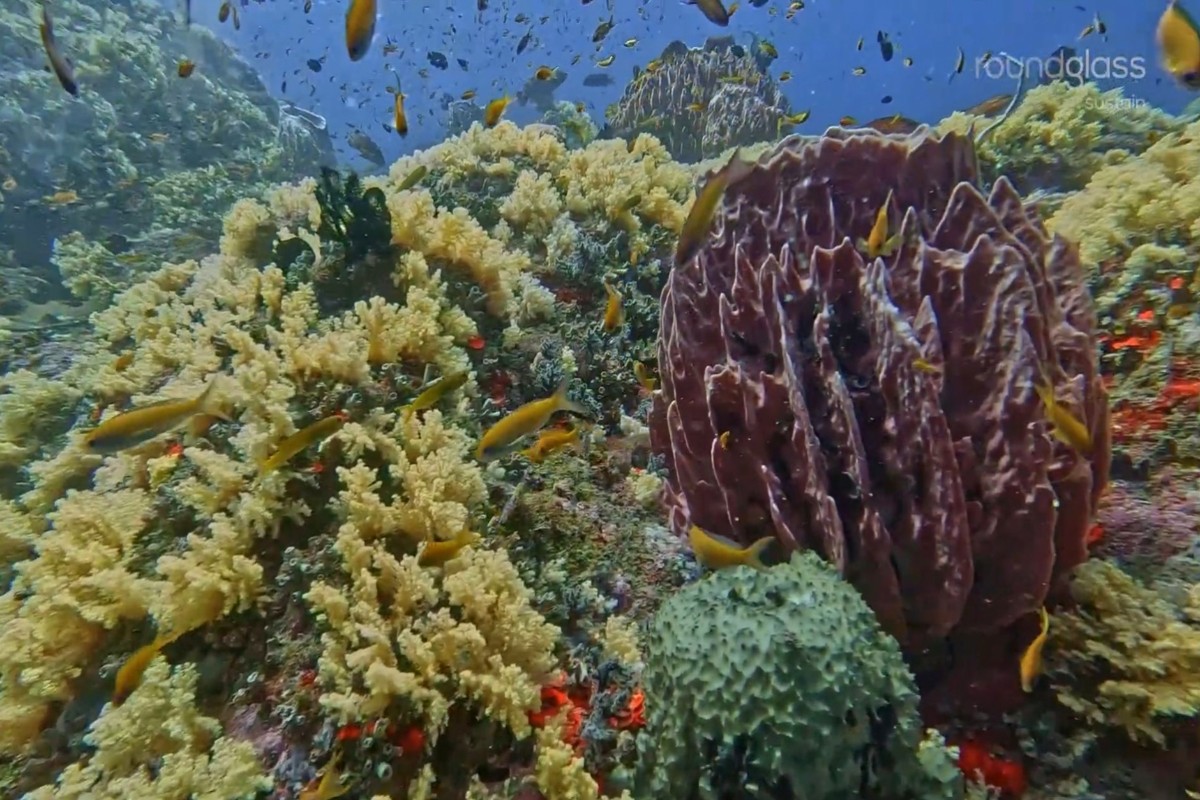
PORT BLAIR: A little-explored stretch of the Andaman Sea is emerging as one of India’s most intriguing new underwater regions, with 12 scuba-diving sites identified across Diglipur and Mayabunder in 2026, bringing divers closer to coral reefs ranging from shallow formations near Ross & Smith Islands to underwater terrain descending to around 40 metres.
Explore Andaman Tour Packages
Planning to explore the islands beyond the new North Andaman dive sites?
Discover our curated Andaman tour packages with stays,
sightseeing, ferry transfers and island experiences.
From One Metre to 40 Metres: Eight New Dive Sites Identified in July 2026
The eight sites announced on July 3 cover dramatically different underwater environments. Landfall East begins at just one metre, while Bochang in Mayabunder reaches a depth of around 40 metres.
| New Dive Site | Region | GPS Coordinates | Depth | Diving Type |
|---|---|---|---|---|
| North of Sound Island Rock | Mayabunder | 13°0.668′ N, 93°0.715′ E | 8–20 m | Boat Diving |
| Marker 077 | Mayabunder | 12°55.130′ N, 92°56.301′ E | 6–15 m | Boat Diving |
| Bochang | Mayabunder | 13°2.193′ N, 93°1.002′ E | 5–40 m | Boat Diving |
| Hiran Tikery | Diglipur | 13°21′59.3″ N, 93°04′59.9″ E | 6–15 m | Boat Diving |
| Landfall East | Diglipur | 13°39′45.5″ N, 93°04′59.9″ E | 1–18 m | Boat Diving |
| House Reef at Ross & Smith | Diglipur | 13°18′40.2″ N, 93°04′20.1″ E | 2–8 m | Shore Diving |
| Paget Island | Diglipur | 13°25′09.2″ N, 92°52′23.7″ E | 6–12 m | Boat Diving |
| Landfall South | Diglipur | 13°37′18.1″ N, 93°01′21.8″ E | 5–20 m | Boat Diving |
Source: Directorate of Tourism, Andaman & Nicobar Administration, press release dated July 3, 2026. Coordinates and depth ranges are reproduced from the official release.
A Remarkable Vertical World of Living Coral
The depth range of the newly identified sites is particularly interesting from an ecological perspective. Coral communities growing in one or two metres of water experience very different levels of sunlight, temperature variation, wave energy and sedimentation from colonies living at depths of 20, 30 or 40 metres.
At Landfall East, the identified diving zone extends from approximately 1 to 18 metres. The House Reef at Ross & Smith occupies a shallow 2–8 metre zone, while North of Sound Island Rock and Landfall South reach approximately 20 metres.
Bochang is the standout. Its identified diving range extends from approximately 5 metres to 40 metres, potentially allowing divers to encounter substantial changes in reef structure, light and marine communities during a single descent.
North Andaman’s Reefs Are More Than Beautiful
A living coral reef is an extraordinary architecture built by animals.
Massive colonies can resemble enormous underwater boulders. Branching corals form intricate thickets. Foliose corals grow in overlapping plates, while encrusting species spread living tissue directly across the reef substrate.
Healthy colonies may appear in shades ranging from cream, honey and golden-brown to green, turquoise, violet, pink and blue. Their appearance varies with coral species, symbiotic microorganisms, fluorescent and non-fluorescent host pigments, depth, water clarity and the changing spectrum of sunlight underwater.
The result is not simply colourful scenery. Every living colony provides habitat and shelter for an interconnected community of fishes, crustaceans, molluscs, echinoderms and numerous smaller reef organisms.
24 Hard-Coral Species Documented Near Kalipur
Scientific research from the Diglipur region already demonstrates the biological importance of North Andaman’s reefs.
A study of the shallow nearshore environment at Kalipur in North Andaman recorded 24 species of scleractinian, or reef-building, corals belonging to 18 genera and nine families.
The documented coral assemblage included representatives of genera such as Lobophyllia, Favites, Goniastrea, Cyphastrea and Platygyra, among others.
Species reported from this environment included Platygyra sinensis, Goniastrea retiformis, Galaxea fascicularis and Gardineroseris planulata.
North Andaman Coral Research at a Glance
Kalipur research documented 24 hard-coral species from 18 genera and nine families, while separate surveys covering Durgapur, Shibpur, Kalipur and Craggy Island documented 314 species of reef-associated invertebrates.
314 Reef-Associated Invertebrate Species Recorded Around Saddle Peak Waters
The diversity surrounding the coral reefs extends considerably beyond corals.
Zoological Survey of India researchers surveying Durgapur, Shibpur, Kalipur and Craggy Island between 2010 and 2014 recorded 314 species of reef-associated invertebrates.
The recorded fauna included sponges, polyclads, crabs, shrimps, lobsters, molluscs, opisthobranchs and echinoderms, illustrating the ecological complexity supported by North Andaman’s reef habitats.
This research is particularly relevant as the broader Diglipur region now receives increased attention for its newly identified diving locations.
Sound Island Already Has a Biodiversity Story
One of the July 2026 locations is officially listed as North of Sound Island Rock, with a diving depth of approximately 8–20 metres.
Sound Island is already known to marine researchers.
An ecological study examining echinoderm communities across six North Andaman locations recorded 53 species of echinoderms, with Sound Island showing the highest species diversity among the locations examined in that particular survey.
Echinoderms include sea stars, brittle stars, sea urchins, sea cucumbers and related animals, many of which play important ecological roles in coral reef systems.
Landfall: A Coral Reef That Lived Through a Geological Catastrophe
Perhaps the most fascinating story among the newly identified locations belongs to Landfall Island.
The massive 2004 Sumatra-Andaman earthquake and tsunami transformed parts of the northern Andaman coastline and reef platform. Tectonic movements altered land elevation, exposed sections of reef and changed the relationship between the shoreline and surrounding sea.
Scientists subsequently used field observations and remote sensing to investigate the post-tsunami adjustment of Landfall Island’s coral reef platform.
The research documented changes in the reef landscape and reported evidence concerning new zones of adaptation by living corals following the enormous environmental disturbance.
The identification of both Landfall East and Landfall South as dive sites therefore gives these locations significance beyond recreational diving. They occur around an island whose coral reef has already been studied as an example of ecological and geomorphological adjustment following one of the most powerful earthquakes ever recorded.
Are North Andaman’s Corals Heat-Resistant?
This may become one of the most important questions surrounding these reefs.
The Andaman Islands have experienced repeated episodes of elevated sea temperatures and coral bleaching. Yet corals do not respond uniformly to heat stress.
Some species bleach rapidly, while others may tolerate elevated temperatures for longer. Responses can also vary between colonies of the same species depending on local conditions, symbiotic communities, depth, previous exposure to thermal stress and numerous other biological factors.
For this reason, the presence of healthy and colourful living coral should not automatically be interpreted as proof that a reef is heat-resistant.
What these North Andaman reefs potentially offer is something scientifically more interesting: an opportunity to investigate coral resilience.
Which species survived previous marine heatwaves? Which colonies recovered? Which reefs continue to support high live-coral cover? Are deeper reefs experiencing different thermal stress from shallow coral gardens? And are juvenile colonies successfully recruiting after bleaching and other disturbances?
The Most Important Number Is Still Missing: Live Coral Cover
Despite the growing body of biodiversity research from North Andaman, one crucial measurement is currently missing for the newly identified 2026 dive sites: site-specific contemporary live coral cover percentage.
The July 2026 Administration announcement describes the locations as having pristine coral reefs and rich marine biodiversity and provides their coordinates and diving depths. It does not, however, publish measurements of live hard coral, soft coral, recently dead coral, rubble, algae or bleaching for each site.
This distinction is important.
A reef cannot scientifically be described as having 70%, 80% or 90% living coral simply because underwater photographs show extensive healthy colonies. Live coral cover normally requires systematic underwater surveys using recognised ecological sampling methods.
12 New Sites Could Become 12 Coral Monitoring Stations
The identification of these sites therefore creates an opportunity extending far beyond diving.
Repeated scientific surveys at Ross & Smith, Landfall, Paget Island, Hiran Tikery, Sound Island, Bochang, Marker 077 and the other locations could establish a valuable baseline for North Andaman’s reefs.
Researchers could measure live hard-coral cover, soft-coral cover, coral diversity, colony colour, bleaching prevalence, mortality, algal cover, juvenile coral recruitment and reef-associated fish and invertebrate diversity.
Monitoring the same coordinates over subsequent years could then reveal whether individual reefs are declining, remaining stable or recovering as the Indian Ocean continues to warm.
A New Window into the Andaman Sea
For decades, the international image of scuba diving in the Andaman Islands has largely centred on the established reefs around Swaraj Dweep, Shaheed Dweep and South Andaman.
North Andaman tells a different story.
Its reefs have endured tectonic upheaval, tsunami impacts and changing ocean conditions. Scientists have already documented significant coral and invertebrate diversity in several northern reef systems, while the identification of new diving locations is bringing previously little-known underwater habitats into greater focus.
The Administration has also made clear that diving activities must comply with prescribed safety standards, environmental safeguards and statutory requirements intended to conserve the islands’ fragile marine ecosystem.
The most extraordinary discovery may therefore still lie ahead.
Once systematic coral surveys are conducted at these newly identified sites, researchers may finally be able to answer the questions that matter most: how much living coral remains, which species are thriving, how colourful and diverse these reefs really are, and which coral communities are proving most resilient as the Indian Ocean grows warmer.
