
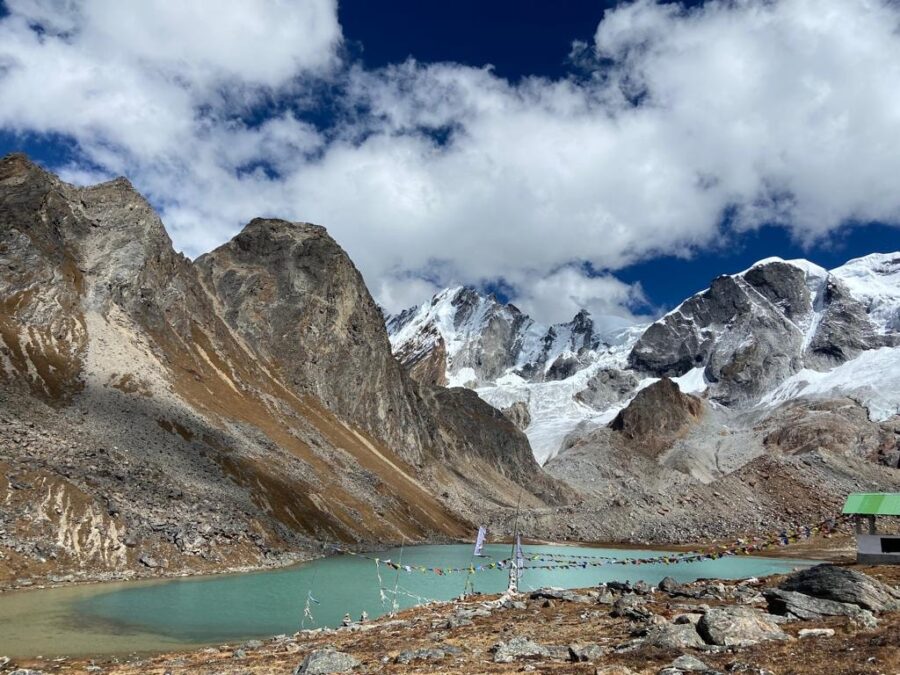
Sikkim, nestled in the Eastern Himalayas, holds a remarkable collection of lakes primarily located in its northern and northwestern regions. These lakes, besides their striking landscapes, are deeply revered for their spiritual and cultural significance, as they feed tributaries that flow into the state’s key rivers, Tista and Rangit. According to the Naysol Text—a sacred Buddhist scripture— there are holy 109 lakes in Sikkim and all are believed to be the abodes of guardian spirits like Devas, Yakshas, Nagas, Nymphs, Demons, and Tantric deities, with names bestowed by pioneering Lamas in the 17th and 18th centuries. Although the Sikkim government officially recognized several sacred sites in 2001, many lakes remain unidentified due to their remote locations, and some now lie within the borders of Nepal and Tibet. Additionally, some lakes are known only by informal names given by local herders or military personnel, making it difficult to confirm the existence and identities of all the lakes.
Sikkim’s lakes, ranging from high-altitude glacial wonders to serene alpine water bodies, reflect the region’s diverse topography and many of them are the prime attractions in a tour package to Sikkim. At extreme elevations, icy blue glacial lakes are set against rugged, snow-capped peaks, creating awe-inspiring landscapes, while those at lower altitudes are nestled amid lush meadows and dense forests, offering tranquil, verdant settings. Their pristine clarity, coupled with dramatic surroundings, showcases Sikkim’s geological diversity and provides visitors with opportunities for adventure, exploration, and peaceful natural experiences.
Here, we will explore all the lakes in Sikkim, ranging from the popular to the lesser-known, from those yet to be discovered to the untouched. Alongside, we will provide practical information, including details on how to reach each lake, whether they are restricted or open to the public, and other essential tips for travelers.
1) Gurudongmar Lake
Embark on an unforgettable journey through the Darjeeling Sikkim mountain trails, where you’ll explore Sikkim’s mystical lakes, each steeped in culture and natural beauty, from glacial wonders to serene alpine gems.
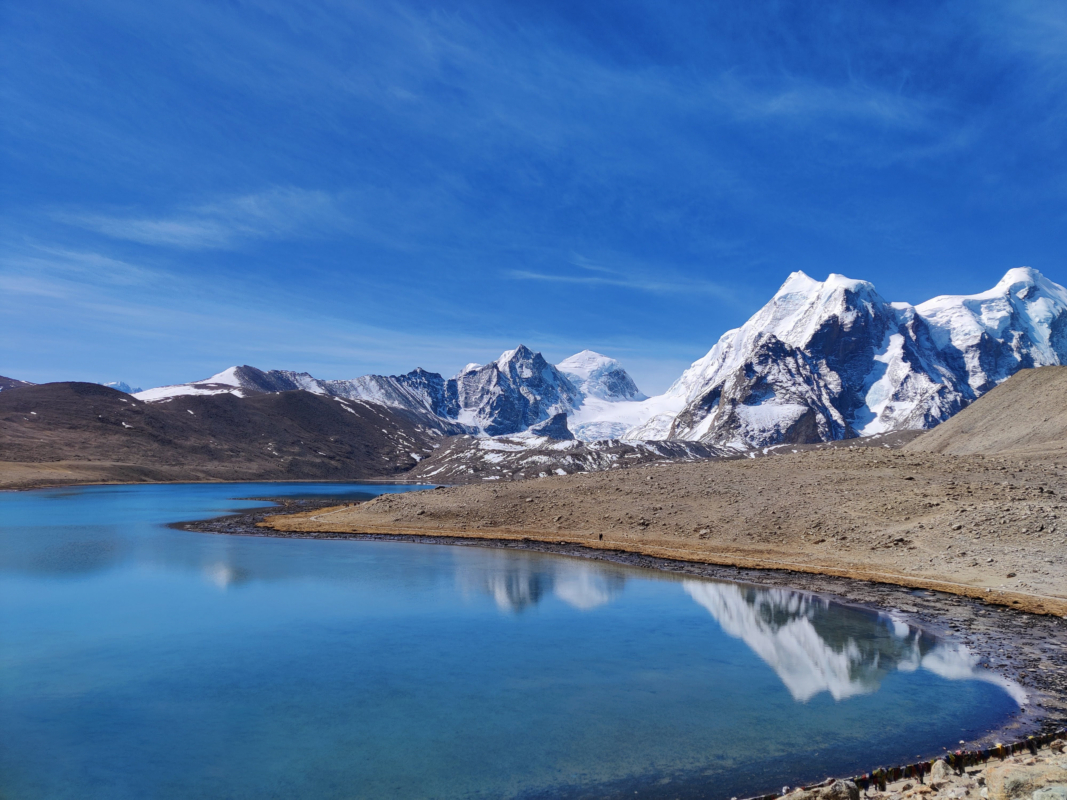
At an altitude of 17,800 feet, Gurudongmar Lake is among the highest lakes in the world, renowned for its stark yet stunning landscape features barren cold desert mountains on one side and rocky snow-capped peaks like Kangchengyao (6889m) on the other, contrasting with the serene blue of the lake. Located in North Sikkim, about 70 km from Lachen, this glacial lake holds sacred significance for both Buddhists and Hindus, attracting visitors for its breathtaking beauty and spiritual value. The lake remains partially frozen throughout the year, enhancing its ethereal charm. Special permits are required for visitation due to its proximity to the international border.
2) Sebo Cho (Gora-La Lake)
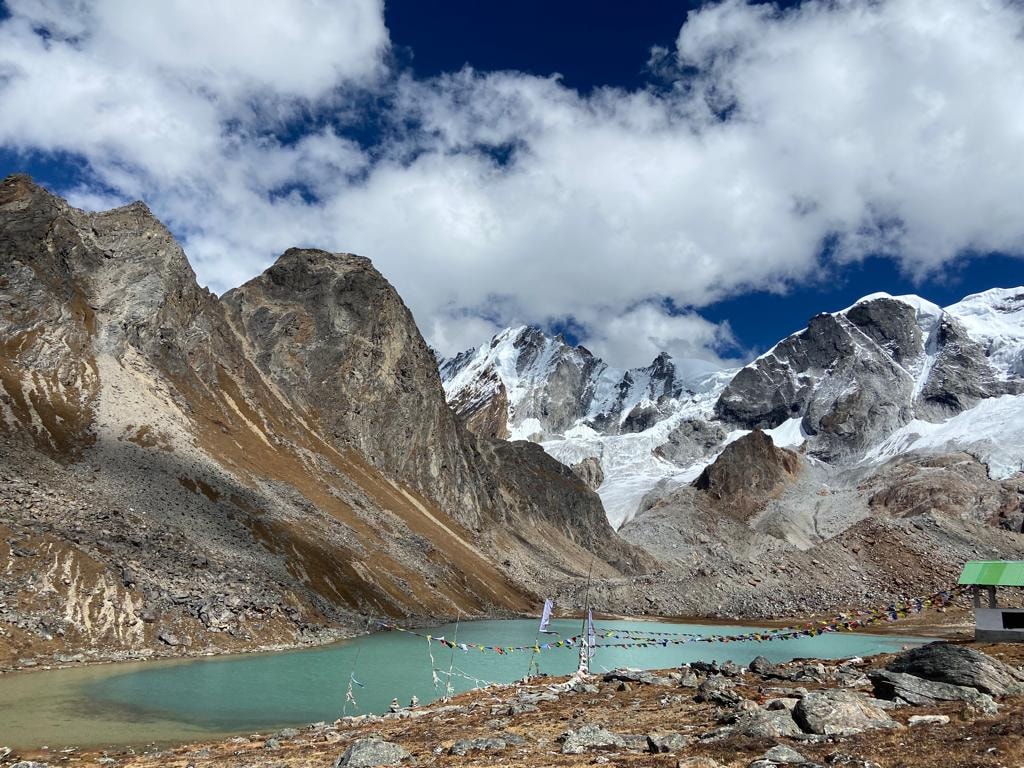
Accessed from Lachung’s Dombang Valley and situated against the backdrop of the expansive Rula Kang Glacier, Sebu or Sebo Cho (also known as Gora La Lake) is a hidden gem in North Sikkim, known for its breathtaking glacial landscapes. Despite being relatively unexplored, it is considered one of the most beautiful glacier lakes in the world. Sebu Cho is located at the base of Gora La, a pass that connects North Sikkim with Tibet’s Yadong County, and lies below the scenic Kangkyong Plateau, the largest high-altitude plateau in Sikkim.
This proglacial lake is the source of the Sebozung Chu or Sebu River, and is nestled in the alpine meadow of Sebu, about 65 km from the village of Lachung. The lake sits at around 4,800 meters and is primarily fed by the icefall from the lower sections of Chombu Mountain (6,363 meters). The meltwater from Sebu Cho also contributes to the Sebu Chu stream, which flows into the Lasha Chu Valley. Known for its pristine alpine ecosystem, the region offers excellent trekking opportunities, with the Sebu La Pass (5,352 meters) providing stunning views of surrounding peaks and glaciers
2) Lake Menmecho
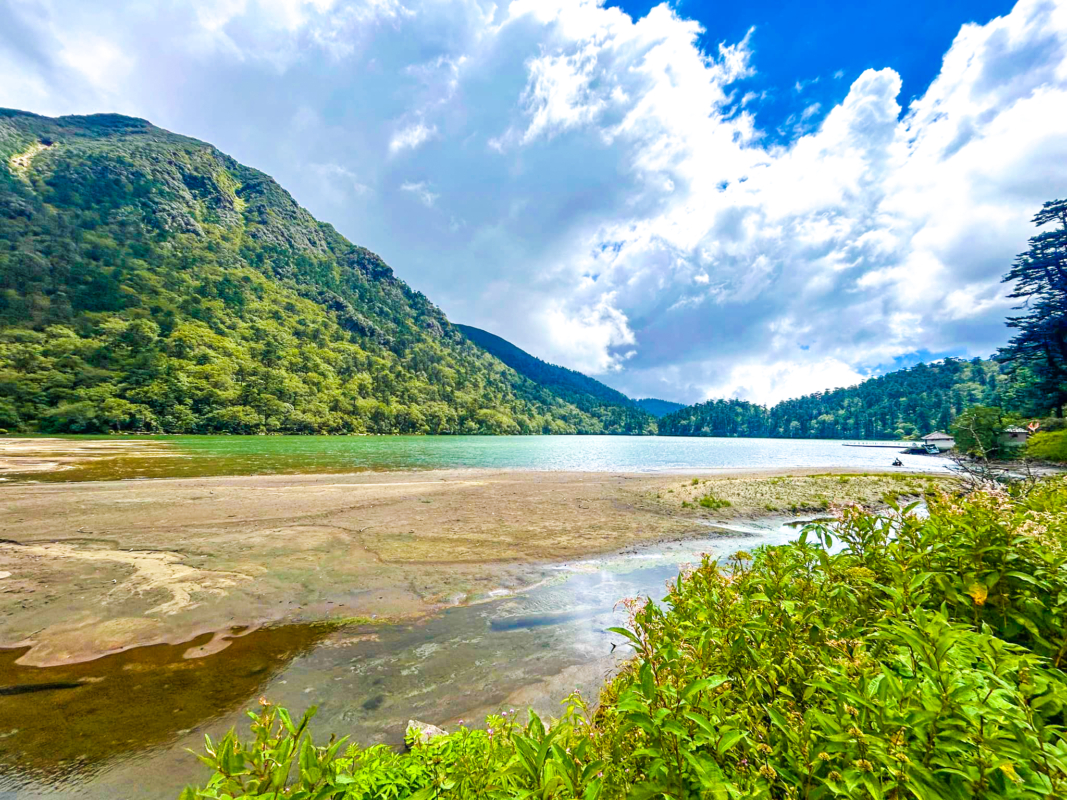
Menmecho Lake, an alpine lake in East Sikkim, is often praised as one of the most beautiful lakes in the region. Located at an altitude of 12,500 feet within the Pangolakha Wildlife Sanctuary, offers breathtaking views both from a distance and up close. The lake is accessible via a 4 km off-road drive or a moderate trek from the New Baba Mandir, with a four-wheel-drive vehicle necessary due to the rugged, boulder-strewn terrain. Surrounded by lush alpine meadows and dense forested hills, Menmecho Lake’s serene waters reflect the pristine natural beauty of the Himalayas. To visit Menmecho Lake, securing permission from the Fisheries and Forest Department of Sikkim is essential. For an immersive experience, including staying at the nearby bungalow, visitors must obtain this permission as well.
4) Tsomgo Lake (Changu Lake)
Tsomgo Lake, also known as Changu Lake, is a striking glacial lake located in East Sikkim at an altitude of 3,780 meters (12,400 feet). Renowned for its stunning natural beauty, the lake is surrounded by snow-capped peaks and lush alpine meadows, creating a picturesque landscape. Its waters change color with the seasons, ranging from deep blue in summer to a vibrant greenish hue in spring. The lake holds cultural significance for the local people, who believe it is sacred. Accessible via a scenic mountain road from Gangtok, Tsomgo Lake is a popular destination for visitors seeking breathtaking views and a serene environment.
5) Hangul Lake
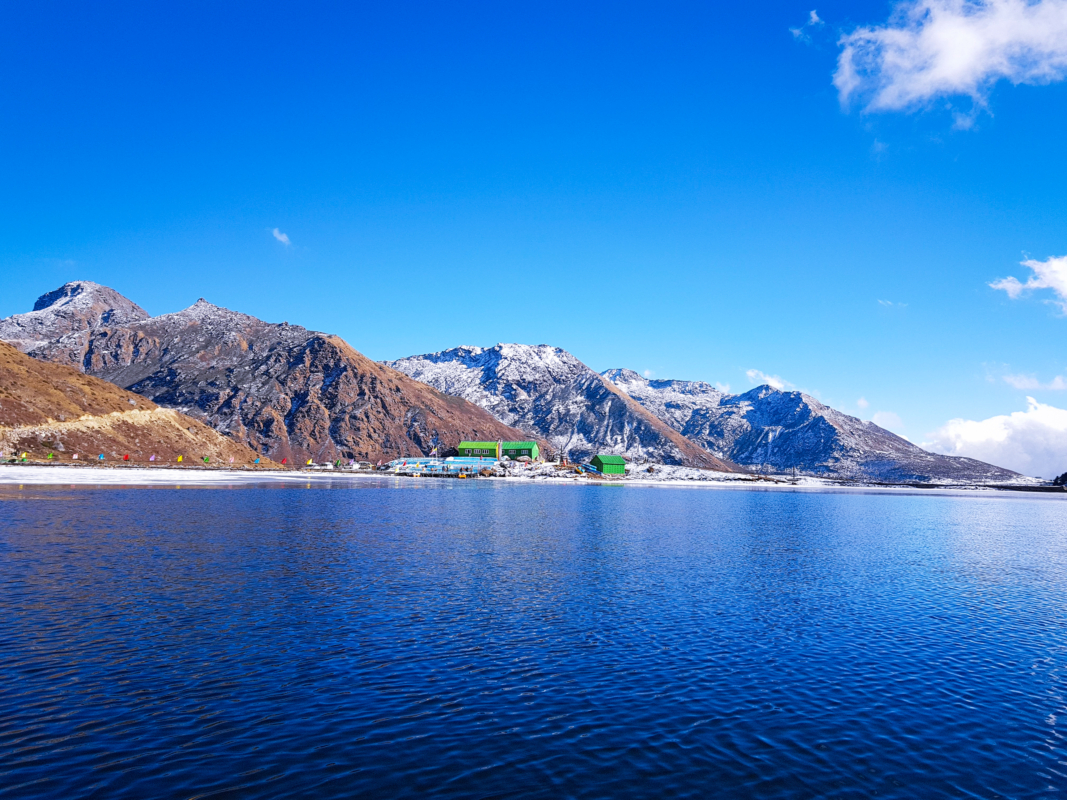
Hangul or Hangu Lake is recognized as the highest boating lake in Asia, situated at an elevation of 13,900 feet along the Nathula-Serathang-Old Baba Mandir-Zuluk Road in Sikkim, India. Positioned just after the turn-off to Nathang Valley from Serathang when coming from the Nathula side, the lake is named “Hangu,” which means “Duck” in the Sikkimese language. This name is fitting, as the lake attracts Golden Ducks (Rudy Shelduck) during the winter months from November to February.
Hangu Lake is located just above the well-known Changu Lake and offers stunning views that can be seen from the roadside before reaching the Baba Harbhajan Shrine. During the summer and autumn seasons, the lake is open for boating, though it is often frozen during the colder months, creating a unique and captivating landscape.
6) Sanglaphu Cho (Lake)
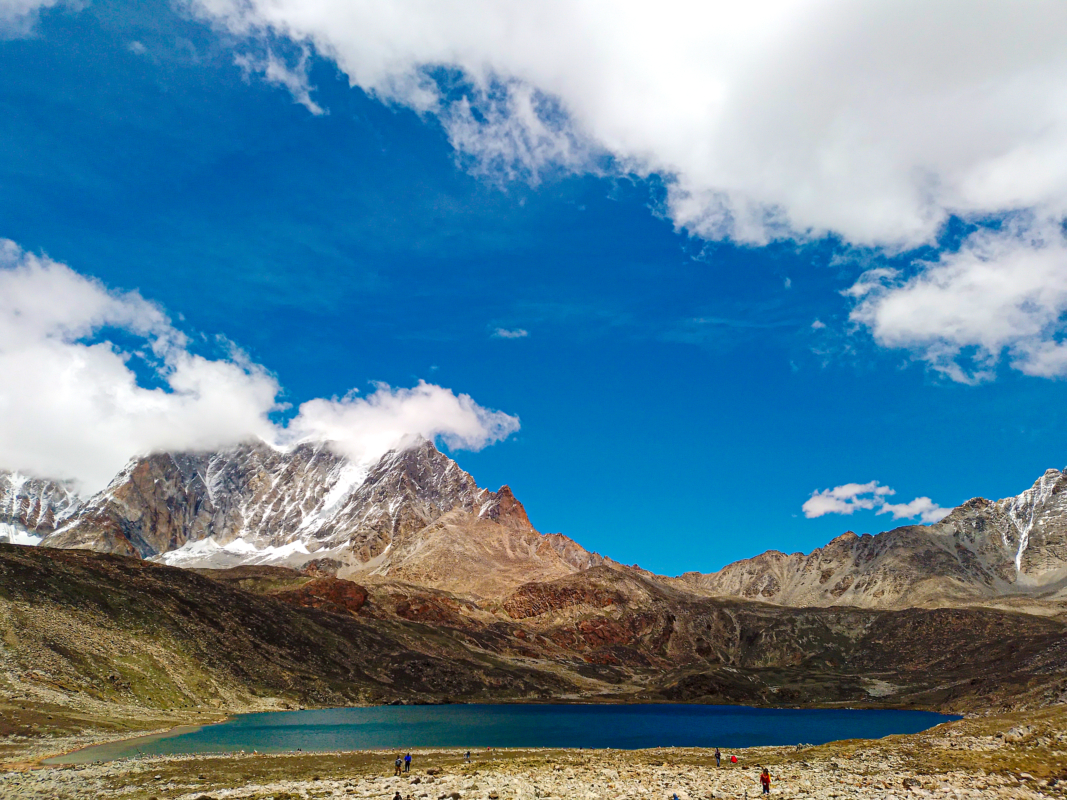
Sanglaphu Cho, situated at an altitude of about 5,080 meters (16,665 feet), is a pristine glacial lake located in Zadong, approximately 6 kilometers from Zero Point in Yumthang Valley. The lake, surrounded by an arid landscape with snow-capped mountains and the striking Sanglaphu Peak in the background, offers a mesmerizing setting. To reach the lake, visitors must walk down from the road to experience its breathtaking beauty. The lake features a unique cave-like structure with snowy peaks forming its walls, and its waters display two distinct colors, enhancing the scenic allure of this remote and serene location.
7) Kishong Tso (Kishyong Lake)
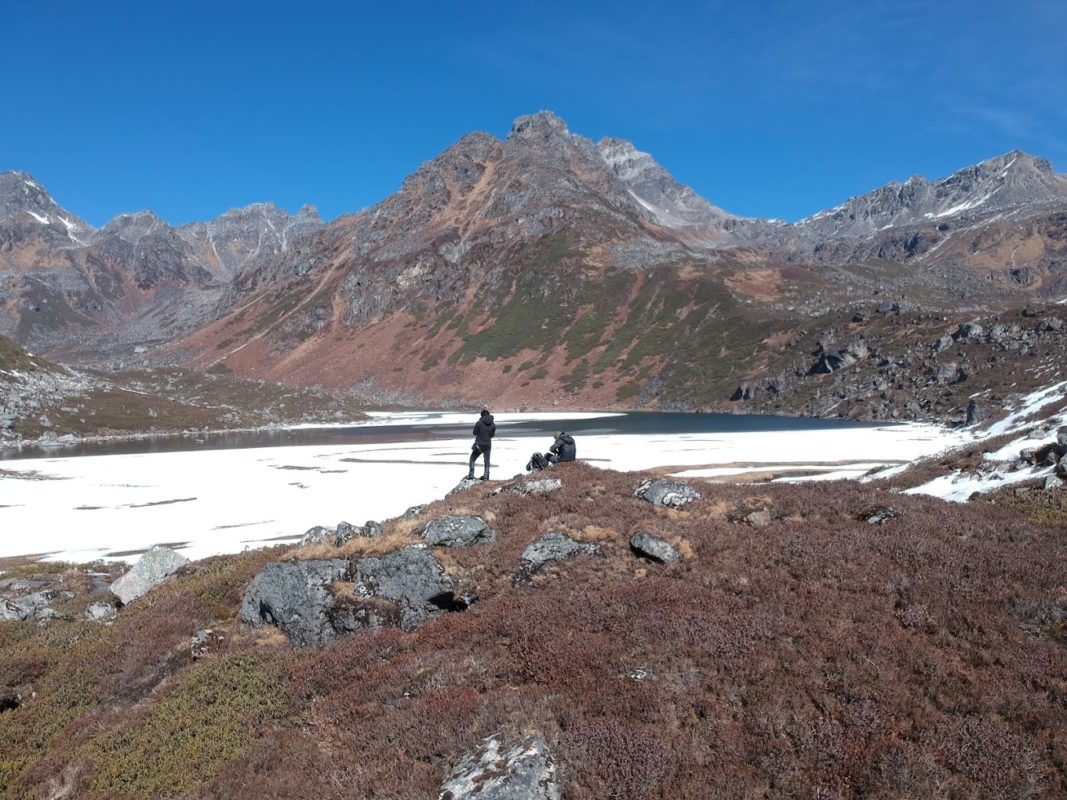
Kishyong Lake, also known as Kishong Tso, is a pristine and remote high-altitude glacier lake located within the Khangchendzonga National Park’s core zone in the Dzongu region, North Sikkim at an elevation of about 14,800 feet. This crystal-clear lake, situated beside Kishong La Pass, is surrounded by rugged mountainscape, forests of rhododendron, pine trees, and medicinal herbs, offering a picturesque and serene environment. The lake serves as the major source of the Ringpi Chu River, which eventually merges with the Rungyung Chu.
The trek to Kishong Lake is strenuous and challenging, making it an ultimate destination for adventure seekers. The trek passes through rich biodiversity, with sightings of yaks, blue sheep, and high-altitude birds. The lake lies in the Keushong Valley, which is renowned for its stunning views of the Kanchenjunga peaks and vibrant flora, including a variety of flowers that cover the valley in rich colors. The Lake also holds deep cultural significance for the Lepcha community, who believe that some of their clans originated from sacred lakes. It is also believed to be a route to heaven, enhancing its spiritual importance.
8) Bhale Pokhari & Doodh Pokhari
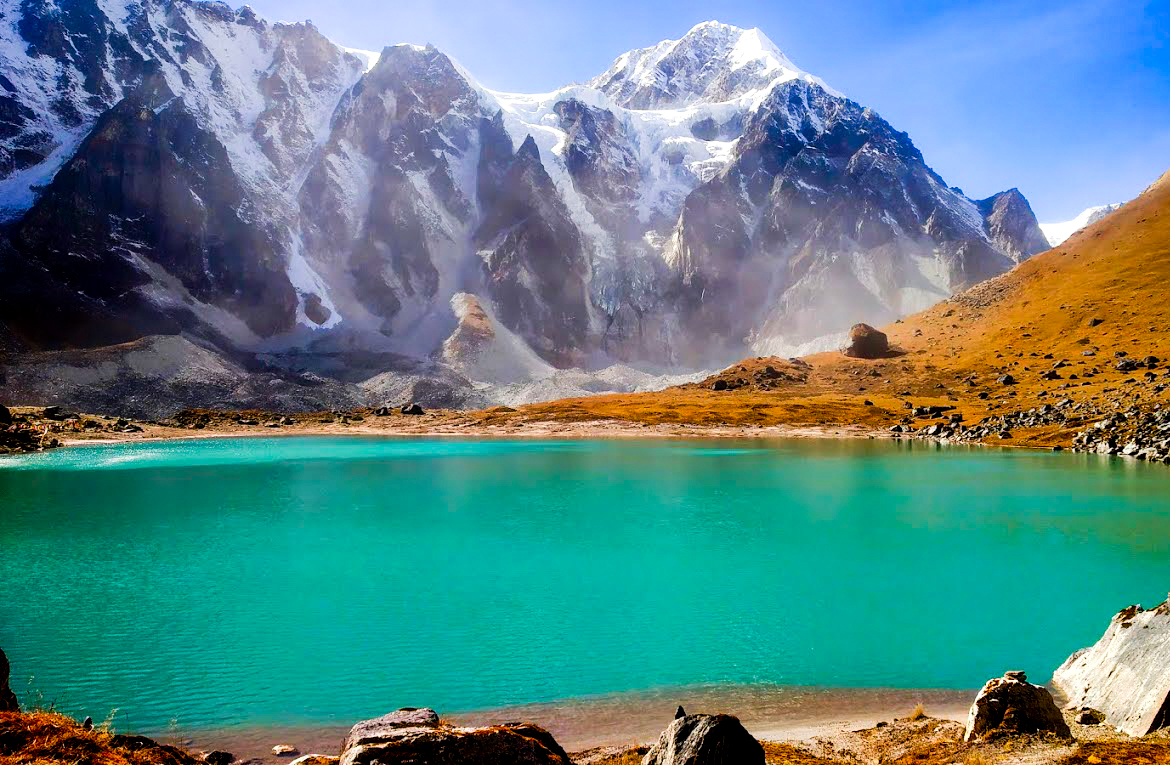
Bhale Pokhari is a sacred lake nestled at the foothills of Mount Kabru Dome, surrounded by towering, snow-clad peaks. This serene body of water is considered to be one of two holy twin lakes, with Bhaley Pokhri representing the male, while Doodh Pokhari, a smaller water body nearby, is regarded as the female counterpart. Both lakes hold religious significance and are revered by local communities. These lakes can be accessed through the route leading to the base camp of the Himalayan Mountaineering Institute, making them not only spiritually important but also a draw for adventurers exploring the high Himalayas.
9) Samiti Lake
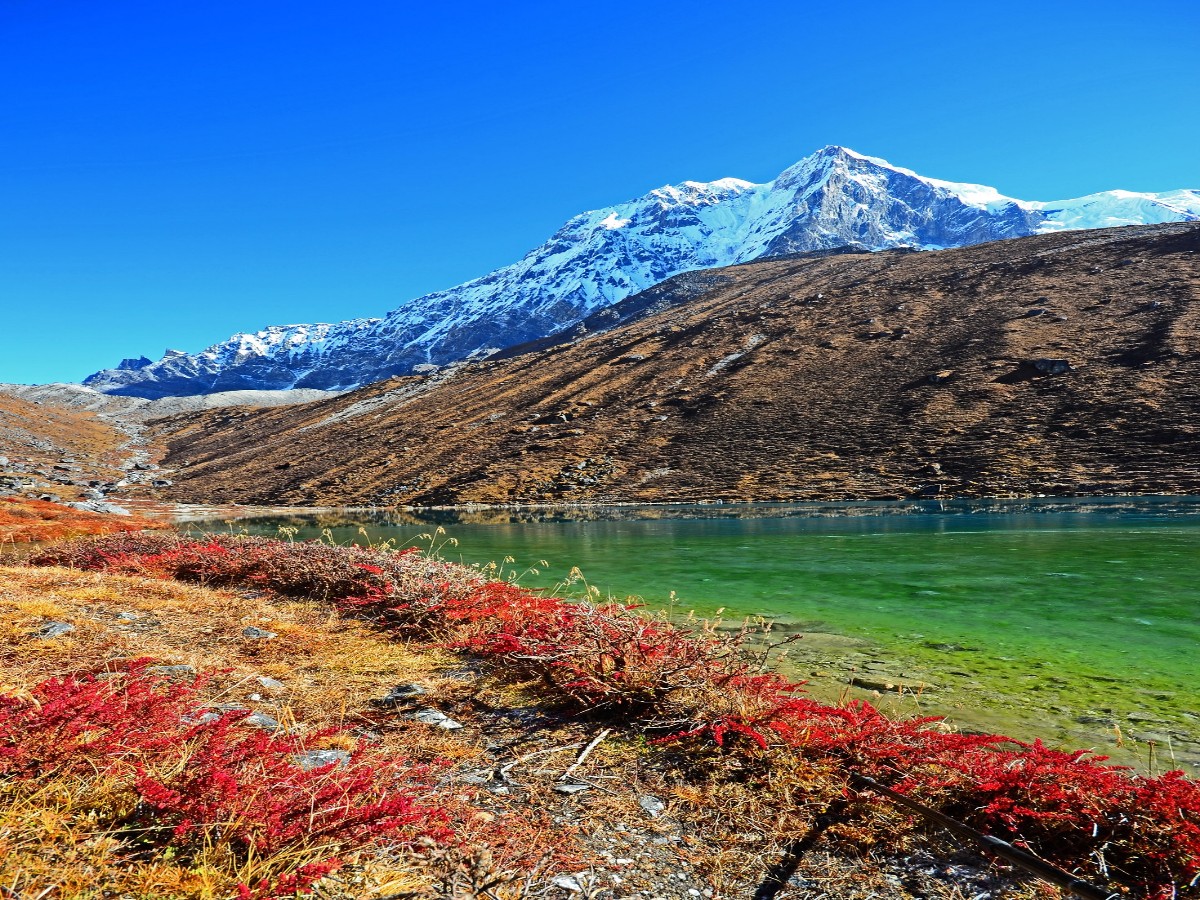
Nestled in the remote Goecha La Trek route, Samiti Lake is one of the most stunning high-altitude lakes in West Sikkim. Sitting at an elevation of around 4,200 meters (13,800 feet), the lake’s emerald green waters reflect the towering snow-capped peaks surrounding it, including the majestic Mount Pandim. As part of the trekking route to Goecha La, a high mountain pass with breathtaking views of Mount Kanchenjunga, Samiti Lake offers a peaceful and awe-inspiring respite for trekkers. The area around the lake is adorned with prayer flags, adding a spiritual essence to its already mesmerizing beauty. The trek to Samiti Lake requires a permit, and visitors are recommended to travel with local guides due to the challenging terrain.
10) Khecheopalri Lake
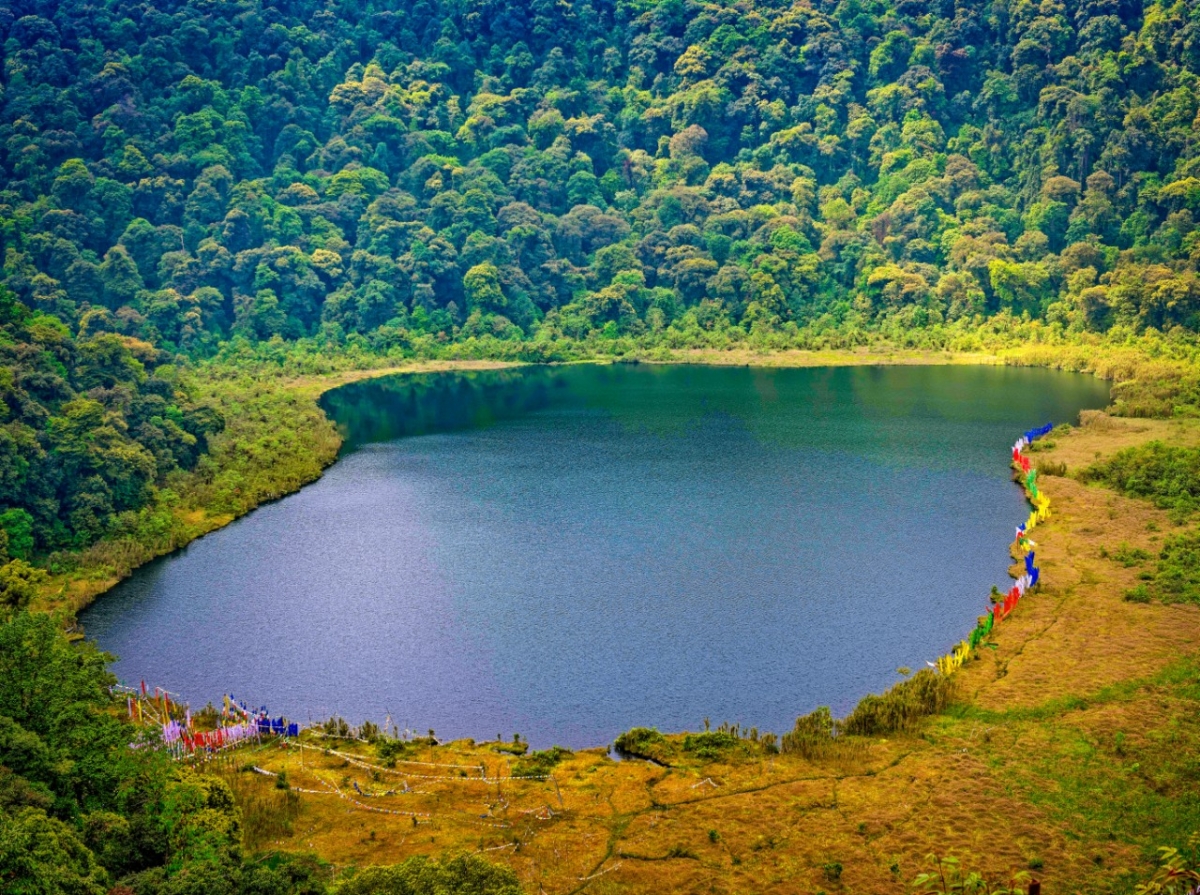
Khecheopalri Lake, located in West Sikkim, is considered one of the holiest lakes in the state, sacred to both Buddhists and Hindus. It is believed to fulfill the wishes of those who visit. The lake is surrounded by dense forests and is part of a larger sacred landscape, including monasteries and meditation caves. Unlike many of the high-altitude lakes, Khecheopalri is accessible without strenuous trekking, making it a popular pilgrimage site. The lake’s calm, mirror-like surface, reflecting the lush greenery around it, creates a serene atmosphere, and it is said that not a single leaf floats on its surface, as the birds pick them up immediately. Khecheopalri Lake is easily accessible from Pelling, a nearby town known for its panoramic views of the Himalayas.
11) Kupup Lake
Kupup Lake, also known as Phedang Tso, is a high-altitude lake located in East Sikkim at around 4,300 meters, near the Indo-China border. Together with the nearby Batang Cho Lake, it forms the Phedang Tso Wetland Complex, a crucial alpine ecosystem spread across 45 hectares. The lake’s unique elephant-like shape gives it the local name Elephant Lake. These lakes are vital water sources for the Jaldhaka River, which supplies the Jalkata Power Station in Bhutan, as well as for the local population and military personnel stationed in the region. In addition to their hydrological significance, the lakes support a diverse range of alpine flora and migratory birds, contributing to the region’s ecological and biodiversity value.
To reach Kupup Lake, you must travel along the Silk Route. The lake is located approximately 66 km from Gangtok and is accessible via a scenic yet challenging drive through winding mountain roads and sharp bends. The nearest major town is Zuluk, about 20 km away. Many tourists visit this area for its panoramic views, especially from the nearby Yak Golf Course, the highest golf course in the world. The best time to visit is from May to June when the weather is pleasant, and the surrounding valley is filled with blooming rhododendrons
These lakes not only represent the breathtaking natural beauty of Sikkim but also embody the cultural and spiritual heritage of the region, deeply tied to the beliefs of the local people. From high-altitude glacial lakes to serene pilgrimage sites, these water bodies are integral to understanding Sikkim’s unique connection to both nature and spirituality.
Table Listing Over 70 Lakes in Sikkim
Here’s the full table of the Wetlands Sites in Sikkim based on the provided details:
| SL No. | Wetland Sites | District | Approx. Area (ha) | Remarks |
|---|---|---|---|---|
| 1 | Chho Lamu Lake | North | 25 | Cold desert, source of Teesta river. |
| 2 | Gurudongmar Tso | North | 40 | Sacred lake, open for regulated tourists. |
| 3 | Dongkyong Tso | North | 4 | Sacred lake. |
| 4 | Gyamtsona Tso | North | 3 | Remnants of the Tethys sea. |
| 5 | Thepla Tso | North | 4 | Sacred lake. |
| 6 | Lashar Marsh Land | North | 45 | Swampy land with a widespread water course. |
| 7 | Green Lake | North | 0.5 | Glacial lake remnant. |
| 8 | Pema Lhatso | North | 3 | A strip of land passes through the lake in KNP. |
| 9 | Muleting Tso | North | 22 | A glacial lake, reported to have an underground passage to Tibet in KNP. |
| 10 | Chopta Tso | North | 4 | A widespread freshwater marsh. |
| 11 | Heegyathang Tso | North | 3 | Located on the peak of Heegyathang village in middle Dzongu. |
| 12 | Tembao Tso | North | 15 | A glacial lake at Menmoisamdong, burst out in December 1998. |
| 13 | Singkam Tso | North | 3 | Freshwater lake in Rhododendron forest above Lachung Hot Spring. |
| 14 | Lava Tso | North | 5 | Above Yumthung, between Kalap in Lachen and Phunikhomo. |
| 15 | Sanglaphu Tso | North | 22 | Freshwater lake near Yumesamdong Hot Spring. |
| 16 | Phunikhom Tso | North | 3 | Above Phunikhomo, extending to Namdasa. |
| 17 | Chomzomoi Tso | North | 9 | Famous lake above Lachung FRH waterfall, historically trekked by the Chogyal of Sikkim. |
| 18 | Tsingo Tso | North | 2.5 | In a deep moraine rocky valley towards Thankerla, now known as Katau. |
| 19 | Youm Tso | North | 2 | A partial glacial lake highly regarded by the Lachungpas, located between Chuba and Thoklung RF. |
| 20 | Patala Tso | North | 4 | Glacial lake with falling debris and boulders. |
| 21 | Ghemtsobhuk Tso | North | 2 | A deep valley dark lake near mountain moraine. |
| 22 | Phegi-sevo Tso | North | 5 | Sacred lake near Khorala. |
| 23 | Tsothang Tso | North | 3 | Near tree line in Dombang Valley. |
| 24 | Thosakhom Tso | North | 4 | Freshwater lake near the tree line above Chakung. |
| 25 | Thosamam Tso | North | 2.5 | Lower lake in Thosa, Chakung. |
| 26 | Kasturiorar Tso | North | 1.5 | A small lake in the mountain saddle above Tsonakmo, near Kabi. |
| 27 | Nak Tso | North | 6 | Black lake below rocky outcrop, source of Bakcha Chu. |
| 28 | Thingchim Pokhori | North | 2 | A small Pokhori above Tingchim village, providing irrigation and water sources for surrounding villages. |
| 29 | Panz Pokhori | North | 6 | A set of five small lakes located 6-7 km from Nak Tso. |
| 30 | Hans Pokhori | North | 2.5 | Shallow backwater lake below Chola, serves as a water source for Gangtok and a halting place for Brahminy ducks. |
| 31 | Anda Zeel | East | 3 | Egg-shaped lake near Tamze check post, source of Tatechu. |
| 32 | Chochempheri Lake | East | 3 | Marshy area rich in medicinal aquatic herbs. |
| 33 | Upper Bedang Tso | East | 4 | Above main Bedang Tso at Kupup, heavily silted. |
| 34 | Upper Namnag | East | 2 | Surrounded by medicinal shrubs. |
| 35 | Yip Tso | East | 0.25 | Small pond inside Kyongnosla Alpine Sanctuary, medicinal properties for skin diseases. |
| 36 | Yakla Tso | East | 2 | Small lake. |
| 37 | Nathula Tso | East | 2 | On the way to Nathula Pass. |
| 38 | Sherathang Marsh | East | 45 | A marshy valley with scattered swamps. |
| 39 | Tsomgo Tso | East | 35 | A famous tourist lake at 12,000 feet elevation, 35 km from Gangtok. |
| 40 | Menmoi Tso | East | 42 | A large lake in a coniferous forest, habitat for trout. |
| 41 | Phedang Tso | East | 45 | Source of water for Jalkata power station in Bhutan, surrounded by military installations. |
| 42 | Upper Zelepla Tso | East | 2 | Moraine lake. |
| 43 | Lower Zelepla Tso | East | 3 | Moraine lake. |
| 44 | Tsonakmo Tso | East | 1.5 | Moraine lake. |
| 45 | Tsonam Tso | East | 1 | Moraine lake. |
| 46 | Lampokhori | East | 52 | Elongated lake stretching north to south near Bhutangla. |
| 47 | Nathang Tso | East | 4.5 | High-altitude lake. |
| 48 | Pangolakkha Tso | East | 2 | Small dark lake. |
| 49 | Rachela Tso | East | 4 | Muddy lake at Rachela. |
| 50 | Aritar Pokhori | East | 2.5 | Semi-natural lake improved for tourism. |
Here is the continuation of the full table:
| SL No. | Wetland Sites | District | Approx. Area (ha) | Remarks |
|---|---|---|---|---|
| 51 | Mulkharka Lake | East | 5 | Part of the green lake series, an important water source for Gangtok. |
| 52 | Lower Bedang Tso | East | 4 | Located near Kupup, often covered with snow during winters. |
| 53 | Tamze Tso | East | 6 | Above 14,000 feet, sacred lake close to China border. |
| 54 | Green Lake | East | 0.5 | Famous trekking destination in the Khangchendzonga area. |
| 55 | Lampokhri Tso | East | 4.5 | Near Gnathang Valley, popular for bird watching. |
| 56 | Keocheopalri Lake | West | 7.5 | Famous for pilgrimage and surrounded by forest, believed to be wish-fulfilling. |
| 57 | Yambong Singalila Wetlands | West | 10 | Series of high-altitude wetlands in the Singalila Ridge area. |
| 58 | Phedang Wetland | West | 2 | Small alpine wetland located on Dzongri trekking route. |
| 59 | Dzongri Wetland | West | 3 | Above Dzongri, a favorite site for trekkers. |
| 60 | Chewabhanjyang Tso | West | 3.5 | Located near the Nepal-Sikkim border, rich in biodiversity. |
| 61 | Kasturi Orar Wetland | West | 4 | A serene wetland near the Kasturi trekking route. |
| 62 | Barsey Rhododendron Sanctuary Wetland | West | 5 | Within Barsey Rhododendron Sanctuary, home to diverse flora and fauna. |
| 63 | Soreng Wetland | West | 3 | A natural wetland below Soreng village. |
| 64 | Tashiding Pokhori | West | 2 | Near the famous Tashiding Monastery, sacred to locals. |
| 65 | Samiti Lake | West | 4 | Famous high-altitude lake on the way to Goecha La trek. |
| 66 | Lampokhri Pokhori | South | 4.5 | Scenic wetland near Maenam Sanctuary. |
| 67 | Karbotey Wetland | South | 2.5 | Near Namchi, a tourist destination. |
| 68 | Tendong Wetland | South | 3 | Small wetland near Tendong Hill, famous for rhododendrons and scenic views. |
| 69 | Ravangla Wetland | South | 2 | In the vicinity of Ravangla, known for its panoramic views. |
| 70 | Namchi Pokhori | South | 2 | A small wetland near the famous Namchi Chardham pilgrimage site. |
| 71 | Menmecho Lake | East | 12 | Renowned for trout fishing, located near Baba Mandir and Tsomgo Lake. |
| 72 | Cho Lhamu Lake | North | 99 | Source of the Teesta River, a high-altitude lake in remote North Sikkim. |
| 73 | Lhonak Lake | North | 18 | Remote lake located near the Zemu Glacier, known for its pristine beauty. |
This concludes the full table of the wetlands in Sikkim with the relevant details.
Source: Sikkim Forest Department
